Introduction
Choosing the right web development company can be one of the most important decisions a business makes. Your website isn't just a digital brochure, it represents your brand, influences customer perception, and often serves as the primary source of leads and sales.
Unfortunately, many businesses focus on price alone or make decisions based on attractive portfolios without considering the long-term impact of their choice. The result is often delayed projects, poor performance, security issues, expensive redesigns, and websites that fail to deliver meaningful business results.
At Marvel Creative Media, we've seen businesses come to us after investing significant time and money in websites that didn't meet their expectations. In many cases, the problems could have been avoided by asking the right questions before hiring a developer.
In this guide, we'll explore the ten most common mistakes businesses make when choosing a web development company, and how you can avoid them to ensure your investment supports your business for years to come.
1. Choosing Based on Price Alone
It's understandable to want to reduce costs, especially for startups and small businesses.
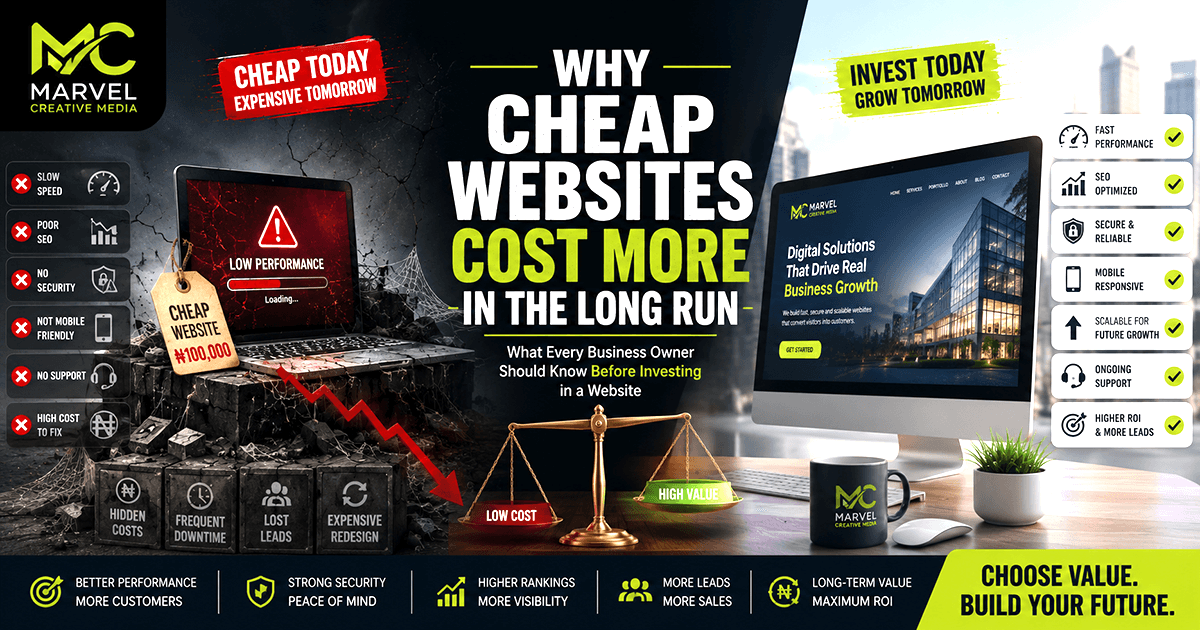
However, selecting the cheapest quote often leads to higher expenses later.
A low-cost website may lack:
Proper SEO optimization
Mobile responsiveness
Security best practices
Performance optimization
Scalable architecture
Ongoing support
Many businesses end up paying twice, once for the cheap website and again for a complete rebuild.
Instead of asking:
"Who's the cheapest?"
Ask:
"Who provides the best long-term value?"
2. Ignoring the Company's Portfolio
A portfolio tells you far more than a price list.
Look beyond attractive screenshots.
Ask yourself:
Do the websites load quickly?
Are they mobile-friendly?
Is the navigation intuitive?
Does each project reflect the client's brand?
Are there examples similar to your business?
A strong portfolio demonstrates experience, attention to detail, and the ability to solve different business challenges.
3. Not Asking About SEO
A beautiful website that no one can find on Google has limited value.
SEO should be considered from the beginning of the project, not added as an afterthought.
Ask whether the developer includes:
SEO-friendly URLs
Meta titles and descriptions
Structured data
XML sitemap
Robots.txt
Image optimization
Core Web Vitals improvements
Mobile-first design
A professional web development company should build websites with search engines in mind.
4. Overlooking Website Performance
Today's users expect websites to load almost instantly.
A slow website can lead to:
Higher bounce rates
Lower search rankings
Poor user experience
Lost leads
Reduced sales
Discuss performance optimization before development begins.
This includes:
Image optimization
Code splitting
Lazy loading
Caching
Content delivery networks (CDNs)
Efficient hosting
Performance is no longer optional, it's a competitive advantage.
5. Forgetting About Security
Cybersecurity should never be an afterthought.
Ask how the development company protects your website through:
HTTPS encryption
Secure authentication
Input validation
Spam protection
Secure file uploads
Regular updates
Backup strategies
A secure website protects both your business and your customers.
6. Choosing a Company That Doesn't Understand Your Business
Technology is only part of the equation.
The best development partners invest time in understanding:
Your industry
Your customers
Your goals
Your competitors
Your sales process
A website built around your business objectives will always outperform one built from a generic template.
7. Ignoring Future Scalability
Many businesses only think about today's needs.
But what happens when you want to add:
An online store?
A customer portal?
A booking system?
A blog?
Marketing automation?
AI-powered features?
A scalable website allows your business to grow without requiring a complete rebuild.
Ask about the underlying architecture and whether it supports future expansion.
8. Not Discussing Ongoing Support
Launching your website isn't the end of the journey.
Websites require:
Security updates
Content updates
Performance monitoring
Bug fixes
Backup management
Feature improvements
Ask what happens after launch.
Reliable post-launch support can save significant time and money.
9. Failing to Clarify Ownership
Before signing any agreement, make sure you understand who owns:
The domain name
Hosting account
Website source code
Design files
Content
Database
You should always retain ownership of your business's digital assets.
10. Focusing Only on Design
An attractive design is important, but it shouldn't be the only priority.
A successful business website also needs:
Fast loading speed
Strong SEO
Conversion-focused layouts
Clear calls to action
Mobile responsiveness
Accessibility
Reliable performance
Secure infrastructure
Great websites combine beautiful design with strategic functionality.
Conclusion
Hiring a web development company is about more than comparing prices or admiring visual designs. It's about finding a partner who understands your business, builds with long-term growth in mind, and delivers a website that performs as well as it looks.
By avoiding these common mistakes, you'll be better equipped to invest in a website that supports your marketing, strengthens your brand, and contributes to measurable business growth.
Remember, your website is often the first impression customers have of your business. Choosing the right development partner today can shape your digital success for years to come.