Introduction
One of the first questions business owners ask before starting a website project is:
"How long will it take to build my website?"
It's a fair question. Whether you're launching a new business, redesigning an existing website, or expanding your online presence, knowing what to expect helps you plan your marketing, operations, and budget more effectively.
The truth is that there isn't a one-size-fits-all answer.
A simple informational website can be completed much faster than a feature-rich corporate platform, e-commerce store, or custom web application. The timeline depends on several factors, including project scope, content readiness, functionality, client feedback, and the development process.
At Marvel Creative Media, we believe transparency is essential. A successful website isn't built by rushing through development, it's built through careful planning, thoughtful design, quality engineering, and thorough testing.
In this guide, we'll walk you through every stage of a professional website project, explain what happens behind the scenes, and show you what typically influences the overall timeline.
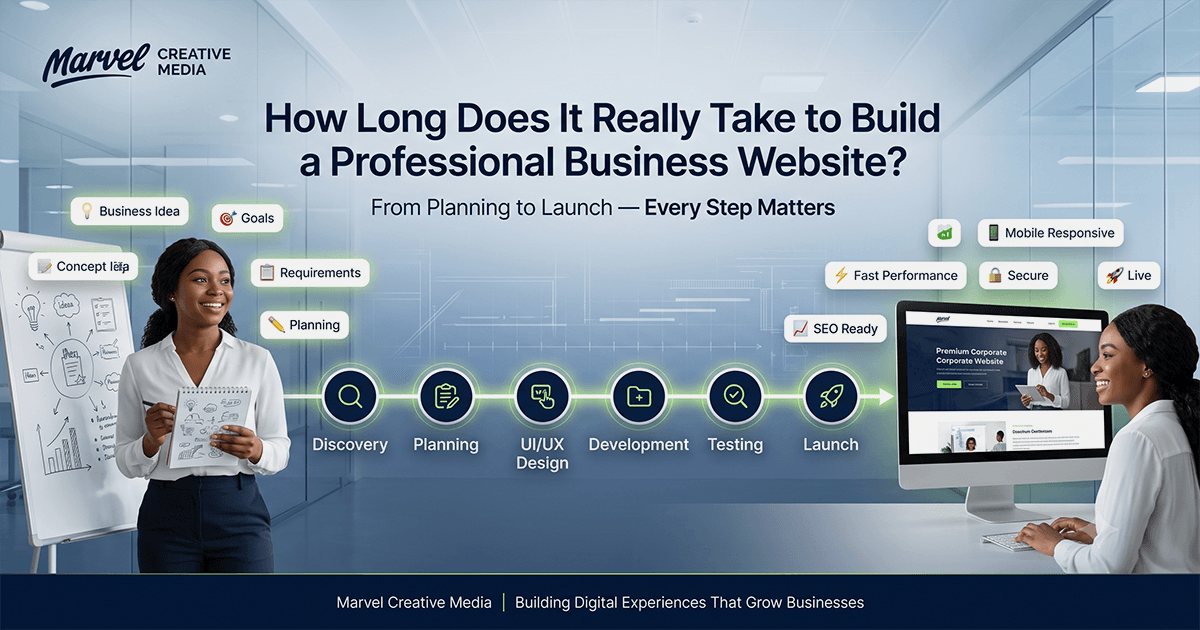
Phase 1: Discovery and Planning (2–5 Days)
Every successful website begins with understanding the business behind it.
Before any design work starts, time is spent gathering information about:
Business goals
Target audience
Competitors
Required features
Brand identity
Website structure
Content requirements
This phase often includes meetings, questionnaires, and research that help establish a clear roadmap for the project.
Skipping proper planning usually creates delays later in development.
Phase 2: Sitemap and Content Planning (2–4 Days)
Before designing pages, it's important to decide exactly what the website will contain.
This includes planning pages such as:
Home
About
Services
Portfolio
Blog
Contact
FAQ
Careers
At the same time, content is prepared, including:
Website copy
Images
Videos
Calls-to-action
SEO keywords
Metadata
Projects move significantly faster when content is prepared early.
Phase 3: UI/UX Design (5–10 Days)
Once the structure is approved, visual design begins.
This stage focuses on creating an attractive, user-friendly experience that reflects the brand.
Typical tasks include:
Homepage design
Internal page layouts
Mobile responsiveness
Typography
Color systems
Buttons
Icons
Visual hierarchy
Rather than simply making a website look good, the goal is to create an experience that guides visitors toward taking action.
Phase 4: Front-End Development (5–10 Days)
After the designs are approved, developers transform them into a fully functional website.
This includes:
Responsive layouts
Interactive components
Navigation
Animations
Forms
Performance optimization
Modern frameworks such as React, Next.js, or Vite help deliver fast, responsive experiences across all devices.
Phase 5: Back-End Development (5–15 Days)
For websites requiring dynamic functionality, backend development is the engine that powers everything behind the scenes.
Examples include:
Contact forms
Admin dashboards
User authentication
Blog management
Product management
API integrations
Database configuration
Email notifications
The complexity of these features directly affects the overall timeline.
Phase 6: SEO and Performance Optimization (2–4 Days)
A professional website should be optimized before it goes live.
Important tasks include:
Meta titles and descriptions
Image optimization
Structured data
XML sitemap
Robots.txt
Internal linking
Performance testing
Core Web Vitals optimization
Building SEO into the website from the beginning helps improve visibility after launch.
Phase 7: Testing and Quality Assurance (2–5 Days)
Before launch, every feature should be carefully tested.
This includes checking:
Mobile responsiveness
Browser compatibility
Form functionality
Broken links
Loading speed
Security
User experience
Accessibility
Quality assurance helps prevent unexpected issues after deployment.
Phase 8: Launch and Deployment (1 Day)
Once everything has been approved, the website is deployed to its live environment.
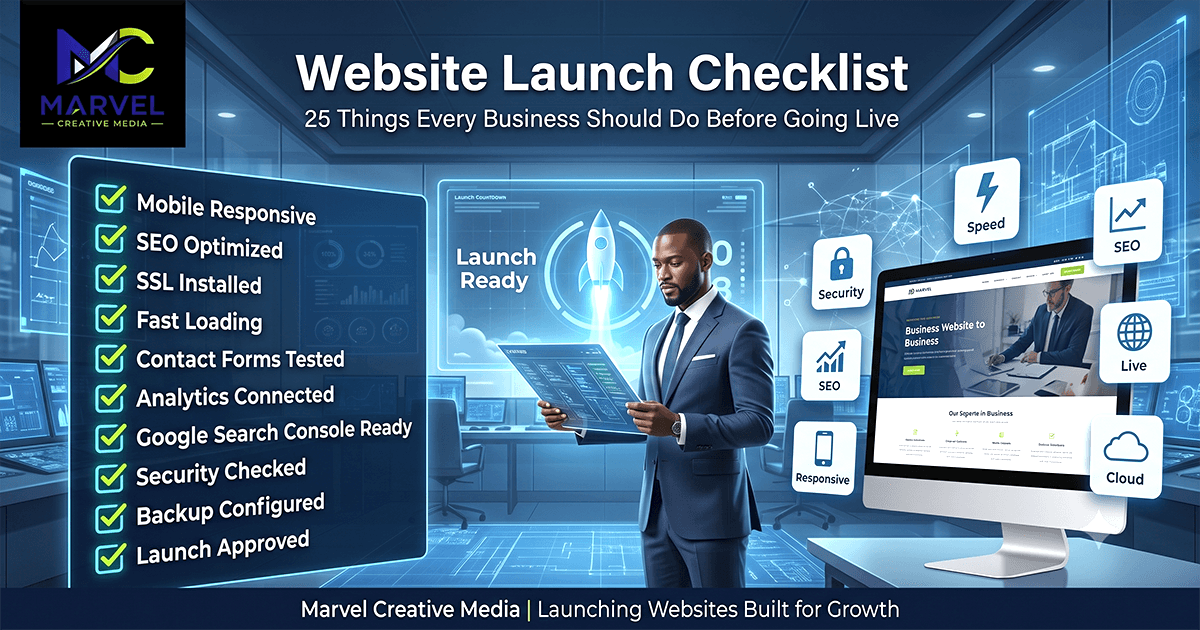
Typical launch activities include:
Domain configuration
SSL installation
Hosting deployment
Final testing
Analytics setup
Search Console integration
Backup creation
A well-planned launch minimizes downtime and ensures a smooth transition.
Phase 9: Post-Launch Monitoring (1–2 Weeks)
Launching a website isn't the end of the project.
The first few weeks are important for monitoring:
Visitor behavior
Search indexing
Page speed
Error reports
Security logs
Form submissions
Analytics data
This helps identify opportunities for continuous improvement.
What Can Delay a Website Project?
Several factors can extend development timelines.
The most common include:
Delayed client feedback
Missing content or images
Changing project requirements
Additional feature requests
Third-party integration delays
Domain or hosting issues
Good communication between the client and development team is one of the biggest factors in keeping a project on schedule.
Typical Website Timelines
Although every project is unique, here's a general guide:
Website Type | Estimated Timeline |
|---|---|
Landing Page | 3–7 days |
Small Business Website | 2–4 weeks |
Corporate Website | 4–6 weeks |
Portfolio Website | 2–3 weeks |
E-commerce Website | 6–10 weeks |
Custom Business Platform | 2–6 months |
The goal should never be to build the fastest website; it should be to build the right website.
Why Rushing Can Cost More
Businesses sometimes request extremely short deadlines.
While quick launches are possible for simple projects, rushing a professional website often leads to:
Poor testing
Weak SEO
Security oversights
Performance issues
Technical debt
Higher maintenance costs
Taking the time to build properly saves time and money in the future.
Conclusion
Building a professional business website is a structured process, not a race.
Every stage, from planning and design to development, optimization, testing, and launch, plays an important role in creating a website that supports your business goals.
While timelines vary depending on complexity, investing in a well-planned development process delivers a website that is secure, scalable, fast, and capable of growing with your business.
At Marvel Creative Media, we believe every project deserves careful planning, transparent communication, and attention to detail. Our goal isn't simply to launch websites quickly, it's to build digital platforms that continue delivering value long after they go live.
If you're planning a new website, remember that quality development isn't measured by how fast it's completed, but by how well it performs for your business over the years.