
Why Modern Business Websites Matter More Than Ever
For many organizations, a website is no longer just a digital placeholder. It is often the first interaction a potential customer has with a brand, the place where trust is built, and a key driver of lead generation, customer service, and business growth.
Modern business websites are expected to do much more than look professional. They need to load quickly, work seamlessly on mobile devices, communicate value clearly, support search visibility, and make it easy for visitors to take the next step. Whether that next step is making contact, requesting a quote, booking a consultation, or completing a purchase, the website plays a central role.
For small business owners, startups, marketing teams, and executives planning a redesign, understanding what makes a website effective is essential. A modern site is not simply a design project. It is a business asset.
What Makes a Website “Modern” Today
A modern website is not defined by trends alone. It reflects current user expectations, business goals, and digital best practices. In practical terms, that means the website should be:
Fast and reliable
Mobile-friendly
Easy to navigate
Visually polished without sacrificing usability
Optimized for search engines
Built with clear messaging and strong calls to action
Secure and easy to maintain
Designed to support measurable business outcomes
In other words, modern business websites combine design, content, performance, and strategy. A visually appealing homepage may attract attention, but it will not deliver value if visitors cannot quickly find what they need or if the site fails to convert interest into action.
Why Modern Business Websites Are a Business Priority
A website influences how customers perceive a company long before a conversation begins. It affects credibility, discoverability, and sales readiness.
First Impressions Happen Online
Before contacting a business, many people evaluate it online. If the website feels outdated, confusing, or incomplete, visitors may question the professionalism of the company itself. That judgment can happen within seconds.
A modern website signals that the business is active, attentive, and invested in customer experience. Clean design, clear information, and intuitive navigation all contribute to a stronger first impression.
Visibility Depends on Digital Readiness
Even strong businesses can struggle to compete online if their websites are not structured for search visibility. Search engines prioritize websites that offer relevant content, strong user experience, mobile performance, and technical quality.
If a business wants to be found by potential customers searching for services, solutions, or local providers, the website must be designed with discoverability in mind. Modern business websites help support that visibility through clear page structure, quality content, metadata, internal linking, and technical performance.
Your Website Supports the Entire Customer Journey
A website is not just for attracting new visitors. It also helps existing prospects and customers evaluate services, compare options, learn about pricing models, understand processes, and find answers to common questions.
That means the website should serve multiple stages of the buying journey:
Awareness: introducing the brand and its solutions
Consideration: explaining benefits, services, and differentiators
Decision: reducing friction and helping users make contact or convert
Retention: offering support resources, FAQs, and updated information
When a website is aligned with this journey, it becomes a more effective business tool.
The Core Benefits of Modern Business Websites
Increased Credibility and Trust
Professional presentation matters. A website that is visually outdated, difficult to use, or missing key information can create uncertainty. By contrast, a modern site helps businesses appear more established and trustworthy.
Trust is reinforced through:
Clear service descriptions
Consistent branding
Accurate contact information
Team, company, or founder details
Testimonials, case studies, or proof points where appropriate
Secure browsing and privacy-conscious design
Trust does not come from design alone. It also comes from clarity, transparency, and ease of use.
Better Lead Generation
One of the most important roles of a business website is turning interest into action. Modern business websites are built to support conversions rather than simply display information.
Lead generation improves when websites include:
Clear calls to action
Short, easy-to-complete contact forms
Well-placed inquiry buttons
Dedicated service pages
Landing pages aligned with campaigns
Strong value propositions above the fold
When visitors quickly understand what a business offers and how to proceed, conversion opportunities increase.
Improved Customer Experience
A website should reduce effort, not create it. Customers expect digital experiences to be simple, responsive, and intuitive.
A positive customer experience includes:
Fast page loading
Easy navigation
Readable text and clean layouts
Mobile usability
Helpful content that answers real questions
Logical paths to contact, purchase, or learn more
If users must search too hard for basic information, many will leave. A modern website respects the user’s time.
Stronger Marketing Performance
Marketing campaigns are only as effective as the destination they lead to. Whether traffic comes from search, email, social media, digital ads, or offline promotions, the website is where interest is evaluated and action happens.
A modern website supports marketing by providing:
Pages tailored to specific audiences or services
Consistent messaging across channels
Conversion-focused landing pages
Analytics to measure performance
Content that supports SEO and authority building
This makes the website an active part of marketing strategy rather than a passive background asset.
Greater Operational Efficiency
A well-structured website can also reduce manual workload. When customers can find answers, review service details, submit inquiries, schedule appointments, or access resources online, staff spend less time handling repetitive questions.
This can improve efficiency across sales, support, and administrative functions. In that sense, modern business websites do not just support growth. They can also support smoother operations.
Essential Features Every Modern Business Website Should Include
Not every business needs the same functionality, but most effective websites share a common foundation.
Clear Positioning on the Homepage
The homepage should immediately answer three basic questions:
What does the business do?
Who is it for?
What should the visitor do next?
Too many websites rely on vague headlines or generic statements that sound polished but communicate very little. Clear messaging is far more effective than clever wording when a visitor is trying to understand whether a business is relevant.
Mobile-Responsive Design
A large share of website traffic now comes from mobile devices. If a site is difficult to use on a phone or tablet, the business risks losing valuable opportunities.
Mobile responsiveness should include:
Flexible layouts
Readable text without zooming
Touch-friendly buttons
Fast mobile loading times
Simple forms and navigation
A mobile-friendly experience is now a baseline expectation, not a bonus feature.
Fast Load Speed
Website performance affects both user experience and visibility. Slow pages can increase bounce rates and reduce conversion potential.
Businesses should pay attention to:
Image optimization
Efficient code and scripts
Quality hosting
Limited unnecessary animations or heavy media
Caching and performance best practices
Speed supports both user satisfaction and digital performance.
Intuitive Navigation
Visitors should be able to find key information quickly. Navigation should be simple, consistent, and organized around user needs.
Common primary navigation items may include:
Home
About
Services or Solutions
Industries or Use Cases
Blog or Resources
Contact
The exact structure depends on the business, but clarity should always come before complexity.
Service or Product Pages With Real Substance
A common weakness in business websites is thin service pages that offer little beyond a paragraph of general information. Strong pages explain what is offered, who it is for, what problems it solves, and what the next step looks like.
Useful service pages often include:
A clear overview of the offering
Key benefits
Process or methodology
Frequently asked questions
Supporting proof or examples
A visible call to action
Detailed pages also create more opportunities to rank for relevant search terms and match specific buyer intent.
Visible Contact Options
Visitors should never struggle to figure out how to get in touch. Contact methods should be easy to find throughout the website.
Depending on the business, that may include:
Contact forms
Phone numbers
Email addresses
Physical location details
Appointment booking tools
Inquiry buttons in key page sections
Reducing friction at the point of intent is one of the simplest ways to improve website results.
Basic SEO Foundations
Search engine optimization starts with a site that is structured properly. That does not require writing for algorithms. It means organizing content clearly and making pages understandable to both users and search engines.
Core SEO foundations include:
Descriptive page titles and meta descriptions
Logical heading structure
Internal linking between relevant pages
Clear URLs
Useful, original page content
Fast performance and mobile usability
Modern business websites are easier to discover when these basics are handled well from the start.
Security and Maintenance
A website should be actively maintained, not launched and forgotten. Security, software updates, backups, and form functionality all need ongoing attention.
An outdated website can create technical issues, performance problems, and avoidable risk. A modern business website should have a maintenance plan in place to protect both the business and its users.
Content Still Drives Website Performance
Design often gets the most attention during a website project, but content is what explains value, builds relevance, and guides action.
Good Content Clarifies, Not Just Fills Space
Website copy should help visitors make decisions. That means it should be concise, specific, and aligned with business goals.
Effective content typically:
Uses plain language
Focuses on customer needs and outcomes
Explains services clearly
Anticipates common questions
Guides the visitor toward next steps
Strong content is especially important for businesses selling complex, high-value, or consultative services.
Educational Content Supports Visibility and Trust
A blog, resource center, or insights section can help businesses attract organic traffic and demonstrate expertise. This kind of content is most effective when it addresses the actual questions potential customers ask during research and evaluation.
Examples include:
How-to articles
Buying guides
Service comparisons
Process explainers
Industry insights
Common mistakes to avoid
Educational content can support both search visibility and relationship-building long before a direct sales conversation begins.
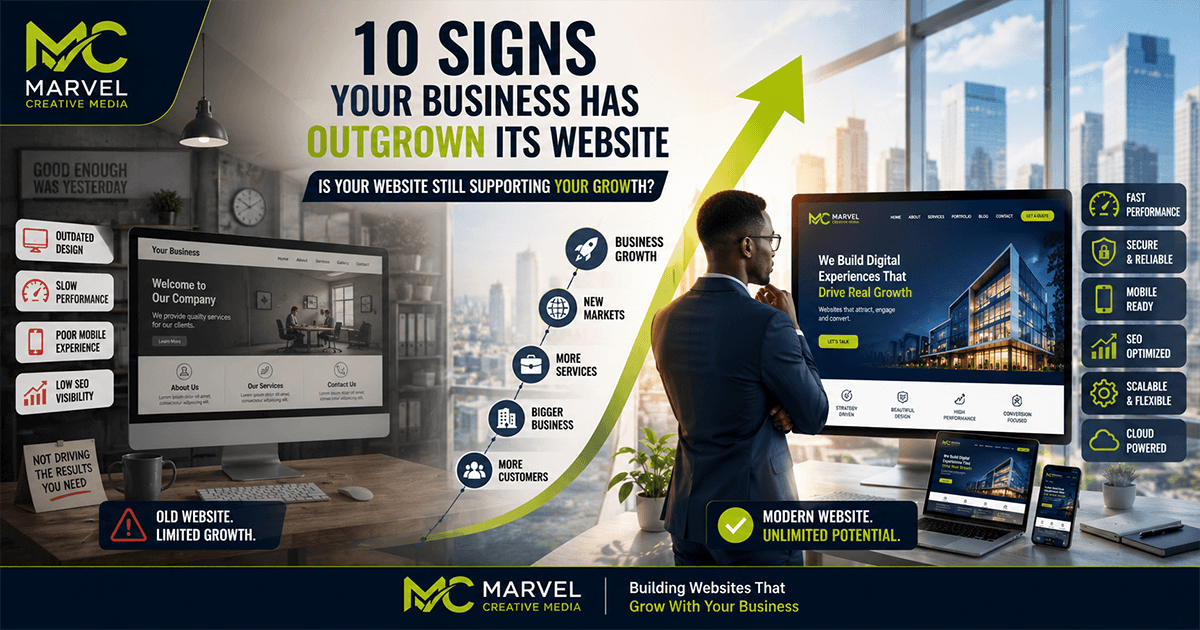
Common Problems With Outdated Business Websites
Many businesses recognize that their websites feel old, but they may not realize how much that affects performance.
Signs of an outdated website often include:
Non-responsive design
Slow loading times
Cluttered layouts
Confusing navigation
Outdated branding or messaging
Broken forms or links
Thin or inaccurate content
No clear conversion path
Limited analytics or tracking
These issues can quietly reduce lead quality, weaken credibility, and undermine marketing investment. A redesign is not always necessary immediately, but regular evaluation is important.
How to Know When It Is Time for a Website Redesign
Businesses often delay redesigns because the current site is still technically functioning. But a functional website is not necessarily an effective one.
It may be time to redesign if:
The brand has evolved but the website has not
The site performs poorly on mobile devices
Lead generation is weak or inconsistent
Visitors struggle to navigate or convert
Services have changed significantly
The website is difficult to update internally
Search visibility is stagnant despite marketing effort
The design no longer reflects the quality of the business
A redesign should not begin with visual inspiration alone. It should begin with business goals, audience needs, and a clear understanding of what the new website must accomplish.
Best Practices for Building Modern Business Websites
Start With Strategy, Not Just Design
Before choosing colors, layouts, or features, define the purpose of the website. Different business models require different priorities.
Questions to answer early include:
Who is the target audience?
What actions should visitors take?
Which pages matter most?
What objections or questions need to be addressed?
How will success be measured?
A strategic foundation helps prevent attractive but ineffective websites.
Align the Website With Business Goals
The website should support clear outcomes, such as:
More qualified inquiries
Better search visibility
Higher conversion rates
Improved customer education
Stronger local presence
Easier appointment or quote requests
When business objectives are defined, site structure and content decisions become much easier.
Keep the User Journey Simple
The best websites reduce confusion. They present information in a way that feels intuitive and purposeful.
That means:
Prioritizing clarity over cleverness
Limiting unnecessary choices
Using consistent page layouts
Making next steps obvious
Removing visual or technical friction
A simple user journey often produces stronger results than a feature-heavy experience.
Measure Performance and Improve Over Time
A website should not be treated as a one-time project. Once launched, it should be monitored and improved based on real performance.
Useful metrics may include:
Traffic sources
Bounce rate or engagement trends
Form submissions
Click-through behavior
Conversion rates by page
Top-performing content
Continuous improvement helps businesses get more value from their websites over time.
The Website as a Growth Platform
The most effective websites support more than brand presence. They become a foundation for ongoing digital growth.
A strong website can support:
Search engine optimization
Content marketing
Paid advertising campaigns
Email capture and nurturing
Local discovery
Sales enablement
Customer onboarding and support
This is why modern business websites deserve executive attention. They are not side projects. They are operational, marketing, and revenue assets.
Conclusion
A modern website is one of the most important investments a business can make in its digital presence. It influences how the market perceives the brand, how easily customers find the business, and how effectively interest turns into action.
Modern business websites are built to do more than exist online. They help organizations communicate value clearly, improve user experience, support visibility, and generate meaningful business results. For companies planning a new site or evaluating an existing one, the goal should not simply be a better-looking website. It should be a better-performing one.
When design, content, usability, and strategy work together, a website becomes far more than a marketing asset. It becomes a practical engine for growth.