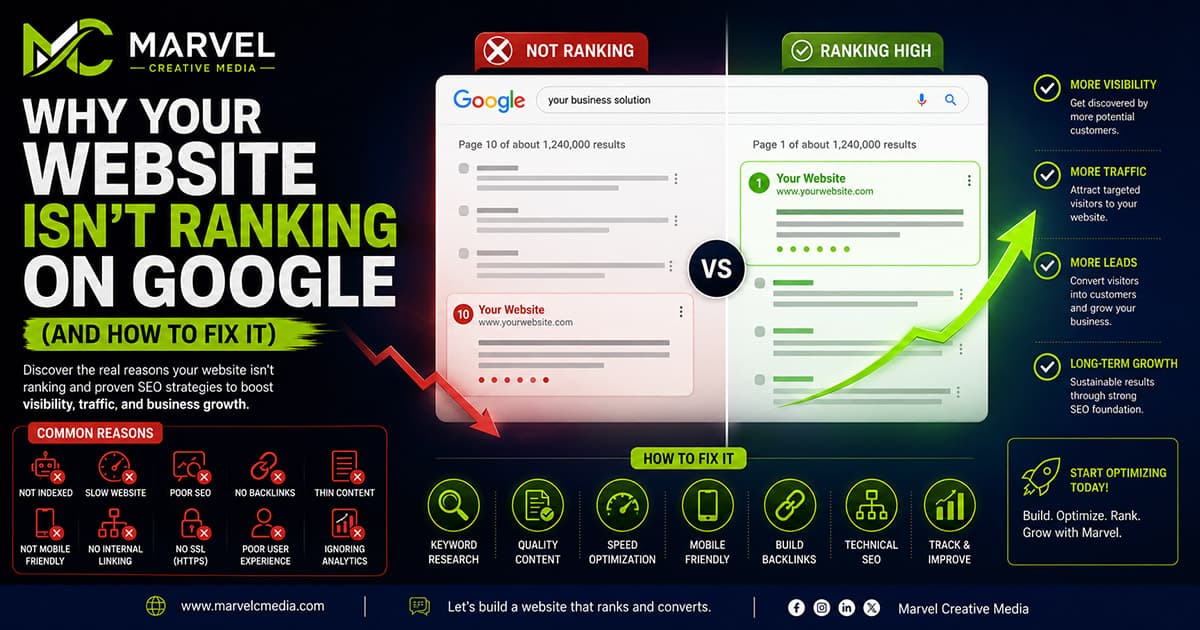

Search is changing quickly, but the central standard has not changed as much as many marketers assume. As Google integrates more AI into search experiences, the winners are not simply the brands publishing the most pages or prompting the fastest drafts. The advantage goes to teams that produce genuinely useful content, support it with expertise or real evidence, and maintain strong editorial control.
That is the real context for AI search optimization. It is not a shortcut for getting cited by AI systems. It is a discipline of making content easier to trust, easier to understand, and more useful in the moments when users need answers.
For marketing teams, this creates both an opportunity and a risk. AI tools can speed up ideation, outlining, summarization, and production support. But when teams use them to scale low-value pages, thin rewrites, or search-first articles with no original contribution, they move into exactly the patterns search systems are designed to reduce.
This article explains what AI-driven search actually rewards and turns that guidance into a practical editorial workflow. If your team wants better performance in modern search without sacrificing quality, this is where to focus.
What changed with AI-driven search experiences
AI-driven search experiences have changed how users interact with results. Instead of only scanning blue links, users may now see AI-generated summaries, clustered answers, synthesized recommendations, and richer contextual explanations before they click through.
That shift matters because it changes the competitive standard for content.
A page no longer competes only to rank. It also competes to be understood, trusted, and potentially used as part of a synthesized answer. In practical terms, that means content needs to do more than target a query. It needs to demonstrate relevance, clarity, and usefulness at a deeper level.
For editorial teams, several implications stand out.
Search visibility is no longer just about position
Traditional rankings still matter, but they are no longer the whole story. A brand may appear in standard organic results, be cited in AI-generated experiences, or lose attention if its content is vague, generic, or duplicative.
That is why Google AI Overviews SEO is not really a separate game from good content strategy. It is a continuation of the same principle: search systems favor content that helps users complete a task, understand a topic, or make a decision with confidence.
Compressed answers increase the value of specificity
When AI systems generate summaries, generic pages become easier to ignore. If a page says what every other page says, it offers little reason to surface it.
Specificity becomes an advantage. Original examples, clear frameworks, firsthand experience, local context, tested processes, and unique insight all make content more useful and more distinguishable.
For example, a marketing team in Nigeria writing about digital campaigns will usually add more value by explaining what works in its own market conditions, buyer behavior, infrastructure realities, and budget constraints than by publishing a generic global summary. That kind of specificity is often what separates useful content from interchangeable content.
Search systems are getting better at identifying value signals
Modern search systems are designed to assess whether content appears helpful, focused, and trustworthy. They can also detect patterns associated with mass production, weak originality, and search-first publishing.
This is why teams that mistake AI search optimization for content volume often run into trouble. The issue is not whether AI was used. The issue is whether the final page creates meaningful value for the reader.
What Google says about AI-generated content
A lot of confusion around AI in content marketing comes from one false assumption: that Google automatically penalizes AI-written content. That is not the official position.
Google’s guidance has consistently focused less on the tool used and more on the quality and purpose of the content produced. In other words, AI-assisted content is not the problem by itself. Low-value content is the problem.
That distinction matters for every marketing team building an editorial workflow.
AI use is not inherently against policy
Using generative AI to support drafting, brainstorming, outlining, summarizing, or language refinement is not automatically a violation of search guidance. What matters is whether the resulting content is original enough, helpful enough, and accurate enough to deserve visibility.
This is the right way to understand AI content policy in practice. Search systems are not rewarding or punishing content based only on whether AI was involved. They are evaluating whether the final material serves people well.
Intent matters
If AI is used to help an expert turn knowledge into a clear first draft, that can improve efficiency without reducing quality. If AI is used to flood a site with repetitive pages designed mainly to capture traffic, that creates risk.
This is where teams often cross into dangerous territory. The problem is not automation in itself. The problem is automation used to manufacture pages that have little editorial value.
Quality thresholds still apply
AI-assisted content still needs human review, factual checks, editorial judgment, and quality assurance. If a tool produces inaccuracies, weak reasoning, vague advice, or stitched-together summaries from common web patterns, the marketing team is still responsible for what gets published.
That means every page should be reviewed as if no one cares how it was made. The only question that matters is: should this page exist, and is it truly useful?
Why people-first content still matters
The phrase people-first content can sound familiar to the point of becoming abstract. But in the context of AI-driven search, it is more important than ever.
People-first content is content created primarily to help a real audience, not just to capture impressions. It has a clear purpose, answers a real need, and reflects a level of care that generic publishing usually lacks.
People-first content is easier for search systems to trust
When content is structured around actual user needs, it tends to be clearer, more specific, and more complete. It answers the question behind the query, not just the phrase typed into the search box.
That makes it more useful for users and easier for search systems to interpret.
A people-first page usually has some combination of the following:
A clear audience and use case
A direct answer to the main question
Evidence, examples, or experience behind its claims
Logical structure and readable formatting
Practical next steps or decision support
Distinctive insight rather than recycled summaries
These are not just editorial best practices. They are increasingly part of what strong AI search optimization looks like.
Generic content loses value faster in AI search
In a traditional search environment, a reasonably optimized but generic article could still attract clicks. In AI-driven experiences, generic content becomes more vulnerable because search systems can summarize the basics without sending users to weak pages.
To earn attention, a page needs to contribute something beyond the baseline answer.
That “something” might be:
Original research or internal data
Hands-on experience
Industry-specific interpretation
A strong framework or process
Local market knowledge
Detailed examples
Clear comparisons grounded in real use cases
The more your content reflects real expertise and actual utility, the more defensible it becomes.
Useful content supports brand outcomes beyond search
People-first content does more than improve discoverability. It also supports trust, conversion quality, sales enablement, and brand authority.
A page that genuinely helps a reader understand a problem or make a decision is more likely to:
Keep them engaged longer
Increase confidence in your brand
Lead to higher-quality enquiries
Support internal linking and broader content journeys
Stay relevant longer than trend-driven search bait
That is why people-first content is not just a compliance-friendly mindset. It is a stronger commercial strategy.
A safe workflow for AI-assisted drafting and human review
Most marketing teams do not need a ban on AI tools. They need a disciplined workflow.
The safest and most effective approach is to use AI as production support inside a human-led editorial system. That means humans define the audience, intent, evidence, angle, standards, and final accountability.
Below is a practical workflow teams can adopt.
H2: Step 1: Start with audience need, not keyword volume
Before drafting anything, define the reader problem clearly.
Ask:
Who is this page for?
What are they trying to understand, decide, compare, or do?
What would make this page genuinely helpful?
What existing pages already cover the basics, and what can we add that is more useful?
Keyword research still matters, but it should support editorial purpose rather than replace it. A strong topic brief should combine search demand with audience context.
For example, if the keyword is related to AI search optimization, the brief should identify whether the reader needs definitions, strategic guidance, implementation steps, examples, risk management, or all of the above.
H2: Step 2: Define the original contribution before writing
This is one of the most important quality controls in modern content production.
Before any draft begins, answer this question: what will this page contribute that is not just a rewrite of existing search results?
Possible answers include:
Internal expertise from your strategists or subject specialists
A proprietary workflow or framework
Customer patterns observed in real projects
Local market insight
Screenshots, examples, or process detail
Commentary on how official guidance applies in practice
If the team cannot identify an original contribution, the topic may not be worth publishing yet.
H2: Step 3: Gather expert input early
Do not wait until the article is finished to involve a subject-matter expert. Bring expert input into the brief or outline stage.
That might mean:
A 15-minute interview with a strategist or practitioner
A review of internal notes, campaign outcomes, or service delivery insights
Collecting examples from account teams, analysts, or consultants
Capturing the questions clients ask most often
This step dramatically improves quality because it gives the draft something real to work with. AI can help organize or phrase information, but it cannot replace firsthand knowledge your team already has.
H2: Step 4: Use AI for structured assistance, not unattended publishing
AI works well as a support layer when used with clear boundaries. Appropriate uses may include:
Generating outline options
Reframing rough notes into sections
Suggesting subheadings
Turning expert transcripts into draft summaries
Improving readability or flow
Identifying obvious gaps in explanation
What it should not do is publish without review or become the source of truth.
A practical rule is simple: if AI writes a passage, a human should verify the facts, refine the claims, and ensure the section reflects the intended audience and brand standards.
H2: Step 5: Build for usefulness on the page
A strong page is not just well written. It is easy to use.
As you draft, make sure the article:
Answers the main question early
Uses headings that reflect real user needs
Breaks down complex ideas into steps or frameworks
Includes examples where helpful
Avoids unnecessary jargon
Adds context for decision-making, not just definitions
Makes clear what the reader should do next
This matters for both people-first content and AI search optimization. A page that is clear, scannable, and complete is more likely to serve both human readers and modern search systems effectively.
H2: Step 6: Apply a human editorial review checklist
Before publishing, every AI-assisted article should pass through a formal editorial review.
A useful checklist includes:
Accuracy review
Are the facts correct?
Are any claims overstated?
Are examples realistic and defensible?
Are recommendations aligned with current guidance?
Originality review
Does the page add anything new?
Is it too similar to common articles on the same topic?
Does it reflect the brand’s own expertise or perspective?
Helpfulness review
Would the target reader leave with better understanding or clearer next steps?
Is the content practical, not just descriptive?
Are there obvious unanswered questions?
Quality review
Is the writing coherent and natural?
Are there vague, repetitive, or filler-heavy sections?
Is the structure logical?
Does the article sound like a professional brand, not a generic AI output?
Risk review
Could any section be considered thin, derivative, or search-first?
Was any part generated at scale without proper review?
Is the page being published because it is useful, or just because it matches a keyword opportunity?
H2: Step 7: Publish selectively and improve continuously
The goal is not to maximize publishing volume. It is to maximize useful output.
That may mean publishing fewer pages with stronger substance. It may also mean returning to improve existing content rather than constantly creating new articles.
Teams that maintain quality usually have clearer performance signals over time because their content library becomes more trustworthy and more defensible.
Risky patterns: scaled pages, thin rewrites and search-first content
Not every use of AI creates risk, but certain patterns should raise immediate concern.
These are the habits most likely to undermine long-term visibility and trust.
Scaled pages with little unique value
One of the clearest danger zones is high-volume publishing where many pages say essentially the same thing with small variations.
Examples include:
Dozens of location pages with minimal differentiation
Industry pages built from one repeated template with superficial edits
Large FAQ sets generated from keyword lists without expert review
Near-duplicate product or service articles targeting slight phrase differences
This kind of production can easily drift toward scaled content abuse, especially when the main goal is to capture search traffic rather than help users.
Even if some pages are technically readable, they may still fail the usefulness test if they do not provide meaningful value.
Thin rewrites of existing information
Another common problem is publishing content that simply rephrases what is already widely available.
A thin rewrite may not copy wording directly, but it still adds little editorial value. In AI-assisted workflows, this often happens when teams prompt tools to summarize top-ranking pages and then lightly edit the result.
The outcome is usually bland, interchangeable content with weak authority.
If your page could be replaced by any other generic article on the topic without losing anything important, it is probably too thin.
Search-first content disconnected from brand expertise
A lot of weak content starts with a keyword opportunity and ends there. The topic may be relevant to search demand, but not to the brand’s actual expertise or audience needs.
This creates articles that are technically optimized but strategically empty.
Search-first publishing often shows up as:
Topics chosen only for traffic potential
Content written without practitioner insight
Advice that stays surface-level because the brand lacks real authority
Articles that attract low-intent readers with no connection to the business
A better filter is to ask whether your team can say something genuinely useful on the topic. If not, ranking for it may not help much even if it were possible.
AI output published with minimal supervision
This is the operational risk many teams underestimate. Once AI speeds up drafting, it becomes tempting to reduce editorial involvement to save time. But weak review creates weak outcomes.
Unsupervised AI content often includes:
Confident but unsupported statements
Repetition disguised as structure
Generic advice with no depth
Inconsistent tone or terminology
Shallow introductions and padded conclusions
Over time, these signals can damage both user trust and search performance.
How teams can measure quality beyond rankings
Rankings matter, but they are a lagging and incomplete measure of content quality. If marketing teams want a healthier content operation, they need additional signals.
This is especially true for AI search optimization, where value may show up in engagement quality, conversion support, and brand trust before it appears as obvious ranking growth.
Measure task completion and usefulness
Ask whether the content helps users do what they came to do.
Depending on the page type, useful signals may include:
Time spent meaningfully engaging with the content
Scroll depth in combination with conversion behavior
Clicks to relevant next-step pages
Form submissions from readers who consumed the content
Reduced bounce on pages designed for problem-solving
Feedback from sales or customer teams that leads are better informed
For a blog article, quality is not just traffic volume. It is whether the right audience found it useful enough to continue the journey.
Track content-assisted conversion paths
Some of the best content does not generate immediate last-click conversions. It supports trust and consideration earlier in the journey.
Review whether high-quality editorial pages appear in assisted conversion paths, internal navigation journeys, or pre-enquiry research behavior. If they do, that is often a stronger sign of value than raw pageviews.
Use qualitative review, not just dashboards
Numbers alone cannot tell you whether a page feels expert, credible, and complete.
Build periodic content reviews into your workflow. Ask editors, strategists, sales teams, or subject specialists to assess whether key articles still:
Reflect current knowledge
Answer audience questions well
Represent the brand accurately
Offer practical value beyond generic search summaries
This kind of editorial governance is increasingly important in a world where publishing has become easier but quality has become harder to maintain.
Audit for originality and overlap
As content libraries grow, many brands accidentally create internal duplication. Multiple pages may target similar topics with slightly different wording but no distinct purpose.
That weakens clarity for users and dilutes overall quality.
Run periodic audits to identify:
Overlapping articles
Thin supporting pages
Outdated posts that no longer add value
Articles with strong traffic but weak engagement
Pages that need consolidation, expansion, or removal
Strong content teams edit their libraries, not just expand them.
A practical standard for modern AI search optimization
If there is one idea to keep in view, it is this: AI-driven search rewards content that is useful enough to deserve trust.
That means:
Start with real audience needs
Define a meaningful original contribution
Incorporate expert input
Use AI as support, not replacement
Maintain rigorous editorial review
Avoid scaled low-value publishing
Measure quality by usefulness, not rankings alone
This is the sustainable path for AI search optimization. It aligns with search guidance, protects brand credibility, and gives marketing teams a workflow they can actually use.
The temptation in this moment is to publish faster because AI makes it possible. The smarter move is to publish better because AI raises the standard for what content must do.
Conclusion
AI has changed search presentation, discovery patterns, and production workflows, but it has not changed the need for quality. Marketing teams that want durable results should resist shortcuts and focus on pages that are clear, original, practical, and genuinely helpful.
That is the strongest response to modern search: not more content for its own sake, but better content shaped by expertise and editorial discipline.
If your team wants help building a stronger content strategy, improving people-first content, or creating a safe workflow for AI-assisted production, contact Marvel Creative Media for professional digital services and expert support tailored to your goals.