Introduction
Many businesses believe that launching a website is the finish line of their digital journey.
In reality, it's only the beginning.
A website alone cannot consistently generate leads, improve customer relationships, strengthen your brand, or drive sustainable business growth. Those outcomes happen when every digital asset works together as part of a connected system.
Think about some of the world's most successful companies.
Their success doesn't come from having a beautiful website alone.
It comes from how their website connects with search engines, social media, email marketing, customer relationship management (CRM), analytics, automation, and customer support.
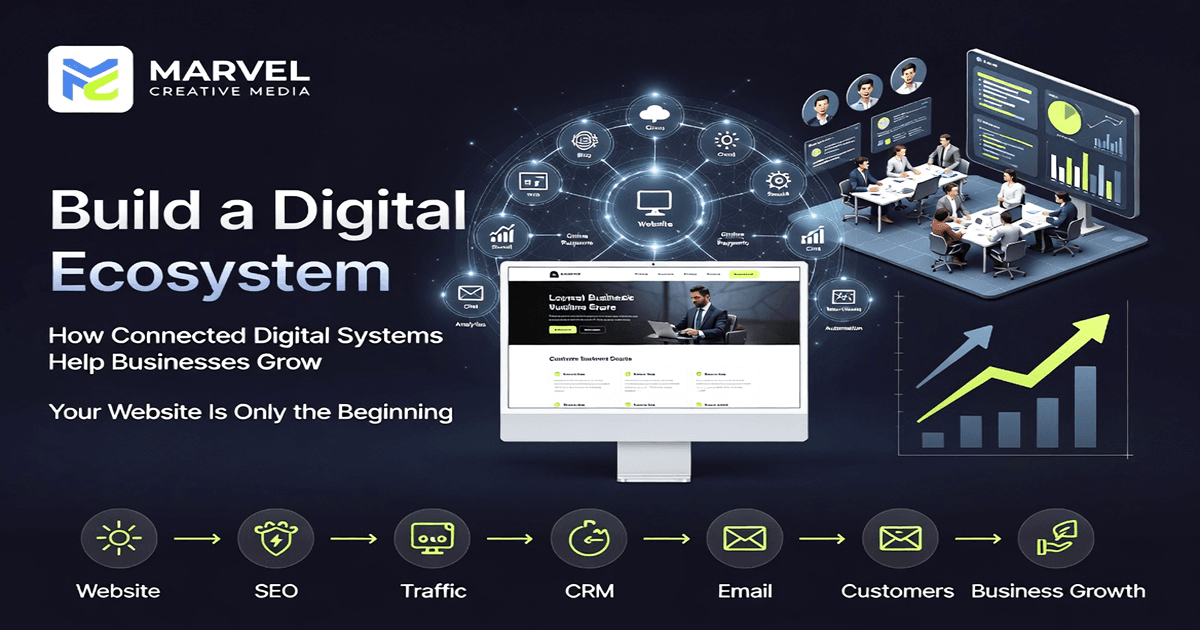
This interconnected system is known as a digital ecosystem.
A well-designed digital ecosystem allows every part of your online presence to support the others, creating a seamless experience for both your business and your customers.
In this article, we'll explore what a digital ecosystem is, why it matters, and how businesses can build one that supports long-term growth.
What Is a Digital Ecosystem?
A digital ecosystem is a collection of connected digital tools, platforms, and processes that work together to achieve business goals.
Instead of operating independently, every component shares information and supports the customer journey.
A typical business ecosystem includes:
Website
Search Engine Optimization (SEO)
Business Blog
Social Media
Google Business Profile
Email Marketing
Customer Relationship Management (CRM)
Analytics
Automation
Customer Support
Each element has its own role, but together they create a much more powerful system than any single tool could achieve on its own.
Your Website Is the Foundation
Every successful digital ecosystem begins with a professional website.
Your website acts as your digital headquarters.
It is where customers:
Learn about your business
Explore your services
Read your content
Submit enquiries
Request quotations
Make purchases
Build trust
Every marketing effort eventually points back to your website.
Without a strong foundation, every other digital investment becomes less effective.
SEO Brings the Right Visitors
A website without visitors cannot generate business.
Search Engine Optimization helps potential customers discover your business when they search for products or services online.
Effective SEO includes:
Technical optimization
Quality content
Keyword research
Internal linking
Structured data
Performance optimization
Rather than chasing traffic, SEO focuses on attracting the right audience at the right time.
Content Builds Authority
Every question your customers ask represents an opportunity.
By publishing useful articles, guides, and resources, your business demonstrates expertise while improving search visibility.
A well-maintained blog helps you:
Answer customer questions
Build credibility
Increase organic traffic
Improve SEO
Generate long-term leads
Content continues working long after it's published, making it one of the highest-return digital marketing investments.
Social Media Amplifies Your Reach
Social media should support your website, not replace it.
Platforms like:
LinkedIn
Facebook
Instagram
X
TikTok
allow businesses to:
Share content
Build communities
Increase visibility
Drive website traffic
The goal isn't simply to collect followers.
It's to guide people toward your website, where meaningful business interactions happen.
Email Marketing Builds Relationships
Most website visitors won't become customers immediately.
Email marketing allows businesses to continue the conversation.
Through newsletters, educational content, promotions, and updates, businesses stay connected with potential customers until they're ready to make a decision.
Unlike social media algorithms, your email list is an audience you own.
CRM Keeps Customer Information Organized
As enquiries increase, managing customer relationships becomes increasingly important.
A Customer Relationship Management (CRM) system helps businesses:
Track leads
Manage conversations
Schedule follow-ups
Monitor sales opportunities
Improve customer service
Instead of relying on memory or spreadsheets, everything stays organized in one place.
Analytics Help You Make Better Decisions
Without data, business decisions become guesswork.
Analytics platforms reveal:
Where visitors come from
Which pages perform best
Which campaigns generate enquiries
How customers interact with your website
Where users leave the sales journey
These insights help businesses continuously improve their digital strategy.
Automation Saves Time
As businesses grow, repetitive tasks consume valuable time.
Automation helps by handling:
Email sequences
Lead notifications
Appointment reminders
Customer onboarding
Marketing campaigns
Internal workflows
This allows teams to focus on higher-value work while maintaining consistent customer experiences.
Customer Experience Connects Everything
Every digital interaction shapes how customers perceive your business.
From discovering your website on Google to receiving a follow-up email after making an enquiry, every touchpoint should feel connected.
A strong digital ecosystem creates consistency.
Customers experience the same professionalism, messaging, and quality across every interaction.
Common Mistakes Businesses Make
Many businesses invest in digital tools without connecting them.
Common mistakes include:
Having a website with no SEO
Posting on social media without linking back to the website
Collecting enquiries without using a CRM
Running ads without tracking conversions
Publishing blogs without internal linking
Ignoring analytics
Disconnected tools create disconnected customer experiences.
How to Build Your Digital Ecosystem
Rather than trying to implement everything at once, build gradually.
A recommended approach is:
Stage 1
Professional website
Mobile responsiveness
Basic SEO
Stage 2
Blog
Google Business Profile
Analytics
Stage 3
Social media strategy
Email marketing
Lead generation
Stage 4
CRM
Marketing automation
Advanced analytics
Stage 5
AI integration
Customer portals
Business intelligence
Personalized user experiences
Each stage strengthens the entire ecosystem.
Why It Matters
Businesses that think beyond individual tools often experience:
Better customer engagement
Higher search visibility
Improved lead generation
Stronger customer retention
More efficient operations
Better marketing ROI
Sustainable long-term growth
Technology works best when every component supports the others.
Conclusion
A website is no longer the destination, it's the foundation.
The businesses leading their industries today aren't relying on isolated digital tools. They're building connected ecosystems where websites, SEO, content, social media, CRM, analytics, and automation work together to create meaningful customer experiences.
At Marvel Creative Media, we believe digital success isn't achieved through a single platform or campaign. It comes from designing systems that grow alongside your business and adapt to changing customer expectations.