
Launching a professional website is an exciting milestone for any business. It represents your brand online, showcases your products or services, and provides customers with a convenient way to connect with you.
However, one of the biggest misconceptions in the digital world is that a website is a one-time investment.
The reality is quite different.
A website is a living digital asset that requires continuous care to remain secure, fast, reliable, and relevant. Just like a vehicle needs regular servicing or a physical office requires ongoing maintenance, your website also needs consistent attention to perform at its best.
Ignoring website maintenance may not cause immediate problems, but over time it can lead to security vulnerabilities, poor performance, broken functionality, declining search engine rankings, and lost business opportunities.
In this article, we'll explore why website maintenance is just as important as website development and why every business should make it part of its long-term digital strategy.
What Is Website Maintenance?
Website maintenance is the continuous process of monitoring, updating, improving, and protecting a website after it has been launched.
It involves much more than simply fixing broken pages.
A comprehensive website maintenance plan typically includes:
Software and framework updates
Security monitoring
Performance optimization
Content updates
Database maintenance
Backup management
Bug fixes
SEO monitoring
Broken link checks
Uptime monitoring
Think of maintenance as preventive care rather than emergency repairs.
Why Website Maintenance Matters
1. Protecting Your Website from Cyber Threats
Cybersecurity threats continue to evolve every year.
Hackers constantly search for outdated software, weak passwords, insecure plugins, and vulnerable servers.
Without regular maintenance, websites become attractive targets for attacks such as:
Malware infections
SQL injection
Cross-site scripting (XSS)
Brute-force login attempts
Data breaches
Website defacement
Routine updates and security monitoring help close these vulnerabilities before they can be exploited.
A secure website not only protects your business but also safeguards your customers' information and strengthens trust in your brand.
2. Maintaining Peak Performance
Website speed plays a critical role in user experience and search engine rankings.
Over time, websites naturally accumulate outdated code, unnecessary files, large media assets, and inefficient database records that slow performance.
Regular maintenance helps by:
Optimizing images
Cleaning databases
Removing unused resources
Updating dependencies
Improving server performance
Monitoring Core Web Vitals
A faster website leads to happier visitors, lower bounce rates, and higher conversion rates.
3. Supporting Better SEO Performance
Search engines favor websites that are healthy, fast, secure, and regularly updated.
Website maintenance contributes directly to SEO by ensuring:
Pages remain accessible.
Broken links are fixed.
Metadata stays optimized.
XML sitemaps remain accurate.
Page speed stays competitive.
Structured data continues to work correctly.
Without ongoing maintenance, even a well-designed website can gradually lose search visibility.
4. Improving User Experience
Visitors expect websites to function flawlessly.
Broken forms, missing images, outdated information, or slow-loading pages create frustration and reduce confidence in your business.
Routine maintenance ensures that:
Navigation works correctly.
Contact forms function properly.
Downloads remain available.
Mobile responsiveness stays intact.
New browsers and devices are fully supported.
A positive user experience encourages visitors to stay longer and take meaningful actions.
5. Keeping Content Fresh and Relevant
Search engines and users appreciate websites that stay active.
Updating blog posts, adding new case studies, refreshing service pages, and publishing helpful resources demonstrate that your business continues to grow.
Fresh content also provides opportunities to target new keywords, answer customer questions, and improve organic search visibility.
6. Preparing Your Website for Growth
Businesses evolve.
New services are introduced.
Teams expand.
Customer expectations change.
A well-maintained website can adapt more easily to these changes.
Regular maintenance makes it easier to:
Add new features
Expand product catalogs
Integrate third-party services
Improve customer portals
Introduce automation
Scale with business growth
Without a maintenance strategy, even small updates can become expensive and time-consuming.
The Hidden Cost of Ignoring Website Maintenance
Many businesses postpone maintenance because everything appears to be working.
Unfortunately, problems often develop quietly.
Ignoring maintenance can result in:
Website downtime
Lost customer enquiries
Declining Google rankings
Security breaches
Broken functionality
Expensive emergency repairs
Damage to brand reputation
Reduced customer trust
Preventive maintenance is almost always more affordable than recovering from a major website failure.
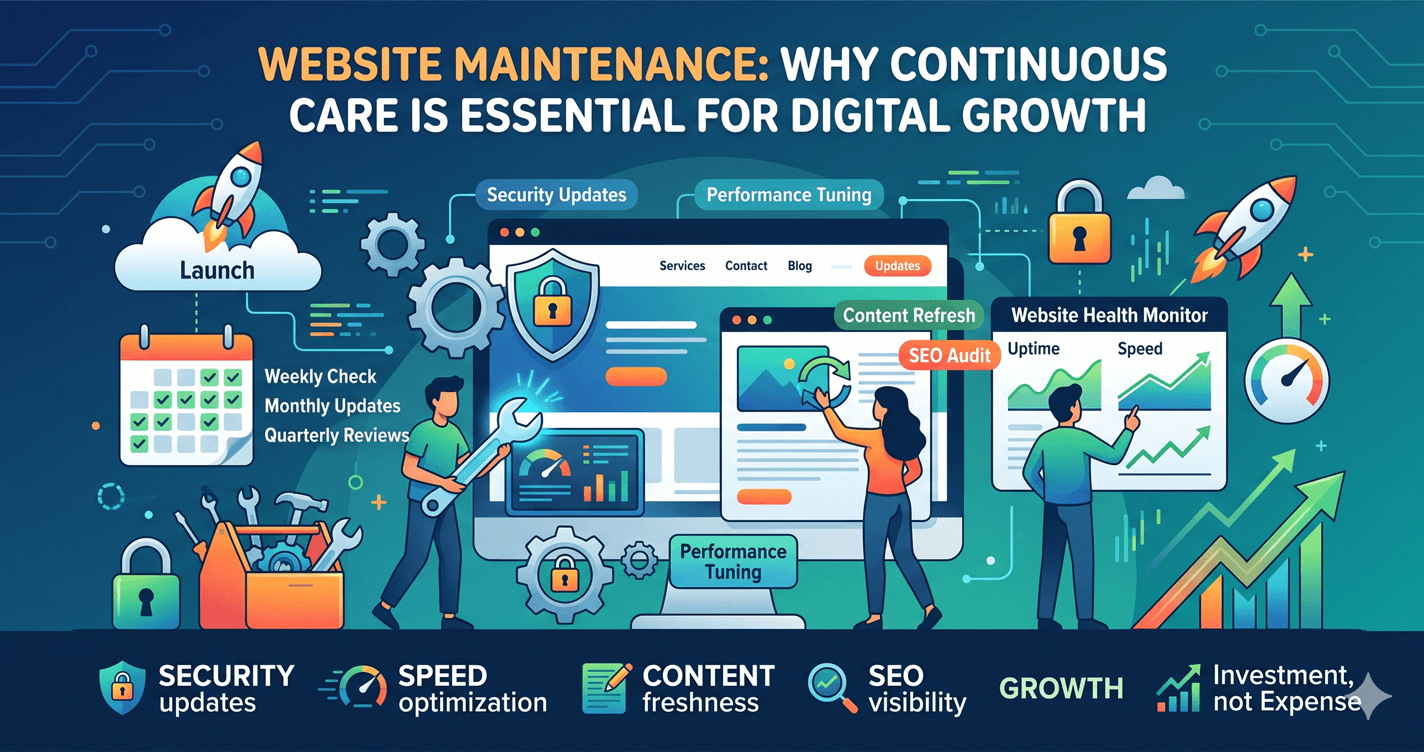
A Simple Website Maintenance Checklist
A practical maintenance routine should include:
Weekly
Check website uptime
Test contact forms
Review security alerts
Monitor backups
Monthly
Update software and dependencies
Optimize images
Scan for malware
Check broken links
Review website speed
Quarterly
Audit SEO performance
Refresh outdated content
Review analytics
Test user journeys
Evaluate website accessibility
Consistent small improvements help prevent larger problems later.
Website Maintenance Is an Investment, Not an Expense
Some businesses see maintenance as an additional cost.
In reality, it protects the investment already made in building the website.
A professionally maintained website delivers:
Better reliability
Improved customer trust
Stronger security
Higher search rankings
Better performance
Longer website lifespan
Greater return on investment
The value of maintenance grows over time because it keeps your digital presence competitive and prepared for future opportunities.
Building a website is only the beginning of its journey.
The websites that continue to perform well year after year are the ones that receive consistent care, regular improvements, and proactive maintenance.
In today's digital landscape, maintenance is no longer optional. It is an essential part of protecting your business, serving your customers, improving your visibility, and supporting long-term growth.
Whether your website is a simple company profile or a complex business platform, investing in regular maintenance ensures it remains secure, reliable, and ready to meet the demands of tomorrow.
A great website isn't just built, it is continuously maintained, improved, and strengthened over time.